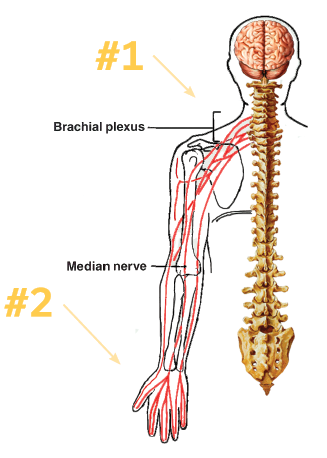
Carpal Tunnel Syndrome (CTS) is a debilitating disorder caused by irritation or pressure to the median nerve which originates in the neck, runs through the shoulder, arm and forearm, and into the wrist and hand. It is one of the major nerves in the hand that provides sensation and movement for the thumb, index and middle fingers. CTS is often described as an aching pain with burning, tingling, and numbness in the wrist or hand and, occasionally, in the forearm. In some cases, muscle weakness, swelling and loss of temperature sensation may be present. Sufferers of carpal tunnel may begin to drop objects or have difficulty lifting small items or turning doorknobs.

The standard medical treatments for CTS include braces, splints, over-the-counter or prescription non-steroidal anti-inflammatory drugs (NSAIDs), vitamin B6, cortisone injections, or surgery. Unfortunately, drugs have potential side effects, and surgery is not always successful.

Three separate studies published in the Journal of Hand Surgery followed the failure rate of some of the common treatments for CTS.

One study revealed that wrist splints and NSAIDs had an 82.6% failure rate while another showed steroid injections had a 72.6% failure rate. The third study showed an average failure rate of 57% in patients that underwent carpal tunnel release surgery. These failure rates support the idea that the actual cause of CTS in the majority of patients might be nerve irritation at a site away from the wrist, as is the case with Double Crush Syndrome.

Double Crush Syndrome & Carpal Tunnel

Stress to the median nerve commonly begins in the neck, where the median nerve begins. The nerve is then aggravated by added pressure or irritation anywhere from the neck to the wrist, which can then cause symptoms in the hand and fingers. This is called “Double Crush syndrome” and is widely referenced in the scientific and medical research journals as a consistent finding in patients with carpal tunnel syndrome. Pressure or irritation to the nerve roots as they exit the neck makes the median nerve more vulnerable to injury at the wrist.

Does Double Crush Syndrome cause Carpal Tunnel?

A growing number of studies suggest that the Double Crush phenomenon is one of the most common causes of CTS. The prestigious medical journal, The Lancet, found that nearly 7 of every 10 CTS patients had nerve irritation in the neck. Another study found that 89% of carpal tunnel sufferers also had arthritis in the neck. Both studies suggest the vast majority of CTS patients actually have Double Crush phenomena.

CTS and the Cervical Spine

Problems in the neck or cervical spine can be as simple as poor posture and muscle tension, or as serious as disc bulges, arthritis, or spinal misalignments, also referred to as subluxations.

A proper evaluation for CTS should include an exam of the entire length of the median nerve, starting at the neck and working down to the hands, wrists and fingers. Since the neck is the most common site for Double Crush to occur, a consultation at Healthy Living Spinal Care would be in the best interest of any CTS sufferer, especially if they have been recommended for carpal tunnel surgery.

The goal at Healthy Living Spinal Care is to correct spinal misalignments that produce irritation to the nerve roots that extend to the wrists, hands and fingers. Clinical findings document that this can prevent the need for surgery.


Healthy Living

6 Videos
THE SIX MAJOR PIECES OF THE

Healthy Living Puzzle

When all six pieces fit together, your body is free to function, adapt, and thrive the way it was designed to.