Inner Ear Disorders

There are several inner ear disorders that cause dizziness or vertigo, nausea, hearing loss, and tinnitus (ringing in the ears).

Although symptoms may differ from patient to patient, there is often a common link with inner ear disorders and injuries or trauma to the upper cervical spine (neck).

Vertigo is the false sensation of movement or dizziness as if the world was spinning. This can range from mild episodes to severe, extended attacks. Vertigo is sometimes accompanied by nausea, vomiting, malaise, hearing loss, tinnitus (ear ringing), and a feeling of ear fullness or pressure. There are several different types of vertigo, including positional, post-traumatic and cervicogenic vertigo (dizziness caused by the neck).

Dizziness, instability and imbalance occur in approximately 50% of all head and/or neck injuries. This includes even mild injuries that don’t require medical attention. According to medical literature, vertigo can also be caused by hyperactivity or irritation to the joints and nerves in the upper neck which assist in the coordination of the eye, head, and body, as well as control posture and spatial orientation.

Meniere’s Disease

Meniere’s disease is a disorder characterized by sudden, recurring attacks of disabling vertigo (a whirling sensation), hearing loss and tinnitus (ringing in the ears), and nausea and vomiting. These symptoms usually last two to three hours, but can sometimes last for days. A sufferer sometimes feels fullness or pressure in the affected ear. Hearing tends to fluctuate but worsens over the years. Tinnitus, which may be constant or intermittent, may be worse before, during, or after an attack of vertigo. Both hearing loss and tinnitus usually affect only one ear. In some cases of Meniere’s disease, hearing loss and tinnitus precede the first attack of vertigo by months or years.

Inner Ear Disorders & Trauma

Available research shows the relationship between inner ear disorders, (vertigo, tinnitus, Meniere’s disease, etc.) and trauma, trauma that can range from a mild bump on the head to a fall, a concussion, or even whiplash from a motor vehicle accident or sports injury. Inner ear disorders can appear immediately after trauma or take months or years to develop.

Can Upper Cervical Spinal Care Help Inner Ear Disorders?

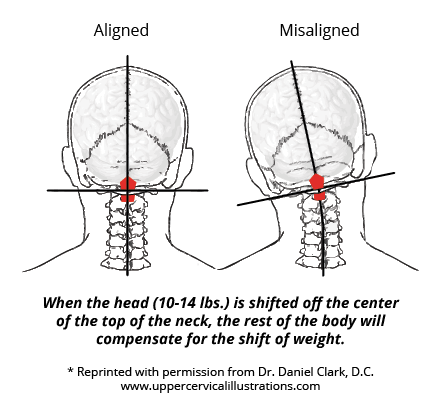
Upper Cervical care is based on the universal law of cause and effect. For every effect or symptom, physical or mental, there must be a root cause. At Healthy Living Spinal Care, we focus on locating and removing interference to the nervous system that can be the cause of the health condition. Removing this interference allows the body to heal itself naturally without drugs or surgery. An Upper Cervical correction is very controlled; there is no pulling, tugging, or jerking of the head. This precise yet gentle touch allows the head, neck, and spine to return to the proper position, thus removing the interference and restoring balance to the body.

How Upper Cervical Spinal Care relates to Inner Ear Disorders

Upper Cervical Chiropractors have extensive education, training and experience in the Upper Cervical spine, brain stem and inner ear disorders. Our goal is not to treat the inner ear disease, but to correct or reverse the vertebral misalignments that cause nerve irritation in the upper neck and inner ear that can trigger vertigo. A spinal examination will assess whether an upper cervical injury is present and whether the patient suffering from an inner ear disorder can benefit from Upper Cervical Spinal Care.

Healthy Living

6 Videos
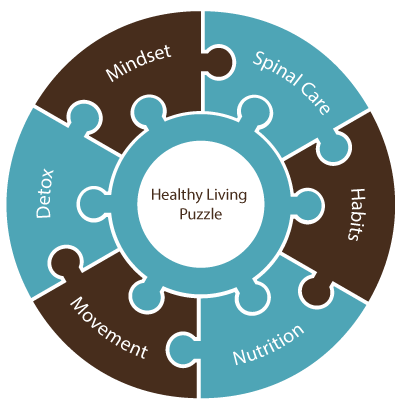
THE SIX MAJOR PIECES OF THE

Healthy Living Puzzle

When all six pieces fit together, your body is free to function, adapt, and thrive the way it was designed to.