You’ve Sprained Your Brain…Now What?

There are many myths and confusion about how to care for your brain after experiencing a concussion. Many people don’t realize the severity of even a mild concussion and that they can be caused by a direct or indirect hit to the head or body. Not all concussions are suffered by athletes while playing sports; falls and accidents can cause them too. All concussions are serious injuries that can have severe repercussions if not managed properly. Proper care during the first 7 – 10 days is crucial to ensure your recovery.

Concussion Symptoms:

  • Headaches
  • Dizziness
  • Blurry Vision
  • Sleep issues (drowsiness, trouble falling asleep)
    Emotional symptoms (moody, irritable, sad, worried)
  • Mental Fog
  • Slow Thinking
  • Difficulty Concentrating

Symptoms are not always immediately present and may take up to 24-48 hours to manifest.

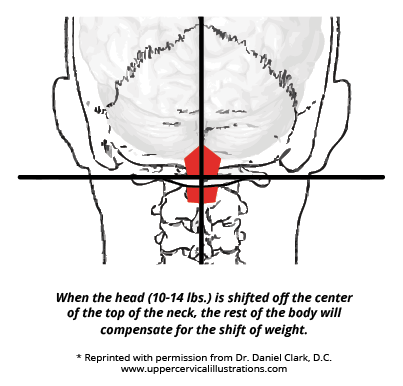
A concussion takes an average impact of 95 G’s of force, but a neck injury occurs at only 4 G’s of force. You cannot sustain a concussion without also experiencing an underlying injury to the neck. Both injuries need to be managed appropriately. An Upper Cervical chiropractor will work to balance and stabilize the neck, which is vital for optimal communication between the brain and the body.

Immediately following the incident:

You should remain awake for two to three hours and be continually monitored. You should NOT DRIVE or be left alone. After 3 hours you may sleep for 2-3 hour increments. Someone should wake you every 3 hours and ask simple questions to ensure that a more serious brain injury hasn’t occurred.

If you feel fine following the incident but notice any of the following symptoms, you should seek emergency care as soon as possible:

Rapid deterioration of symptoms
Severe headache with sudden onset
Slurring
Inability to be woken up
Repeated vomiting

A major problem is that many people don’t know what it means to ‘rest’ a brain.

If you go right back to work or school, or resume any physical or mental activity, it’s as though you are going for a run on a sprained ankle. Remember the brain needs a LOT of energy to heal.

There is a 30-day window following the incident in which you are most vulnerable. It is crucial that during the first 10 days you refrain from any activity that could put you at risk for any kind of physical contact, even if you are feeling recovered and asymptomatic. The brain is extremely vulnerable after a concussion; even if you feel no symptoms, any further jostling or sudden movement, even small impacts, can actually cause a more severe brain injury. How you feel doesn’t always coincide with how well your brain has recovered.


Healthy Living

6 Videos
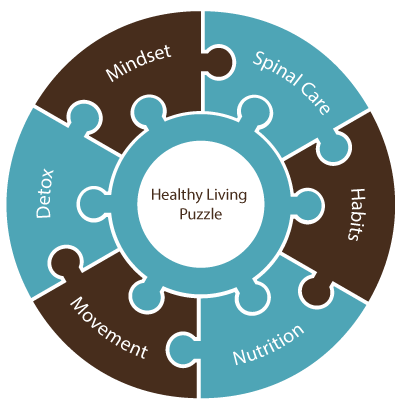
THE SIX MAJOR PIECES OF THE

Healthy Living Puzzle

When all six pieces fit together, your body is free to function, adapt, and thrive the way it was designed to.